
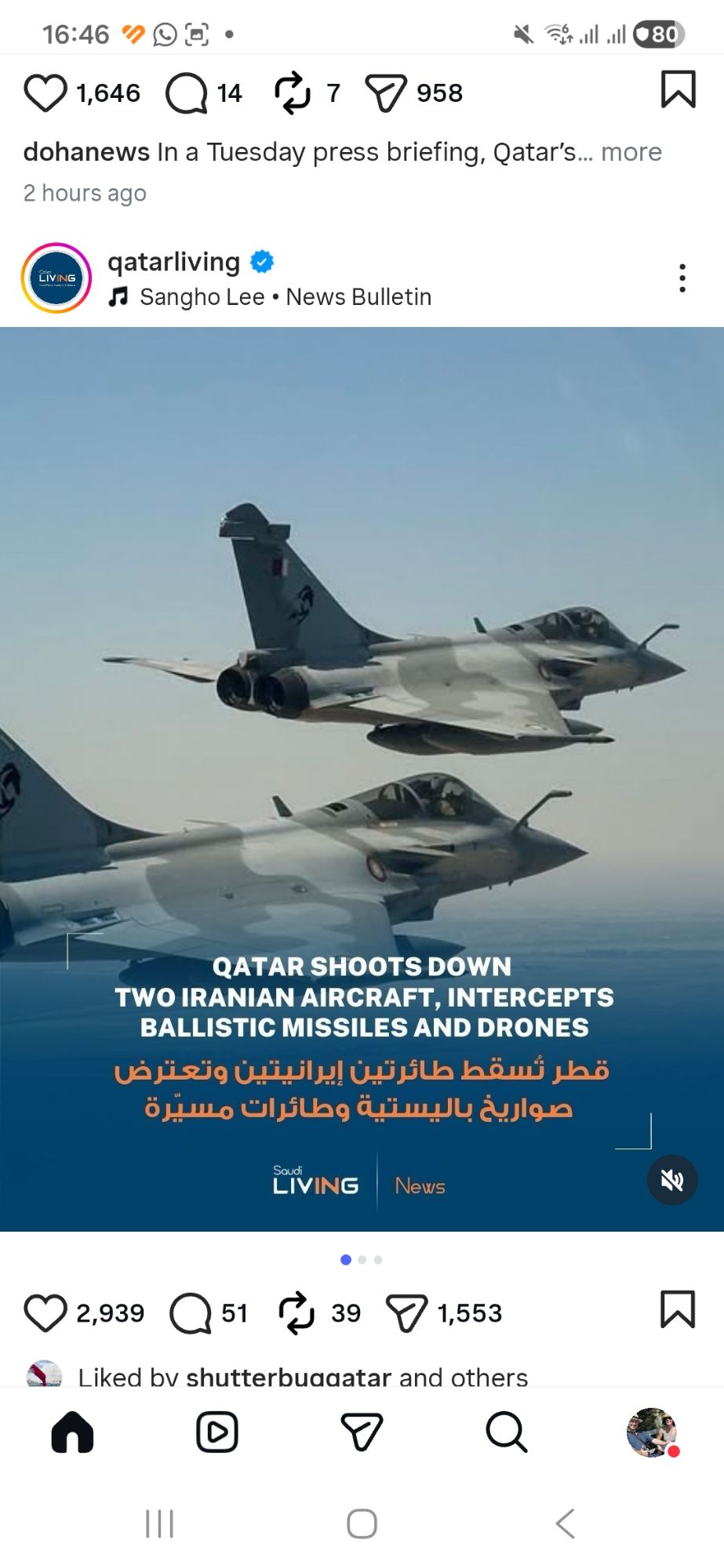
Surreal and scary.
That’s as it is for me – and so, so many others – living in Doha, Qatar, in the Middle East right now as I share what day-to-day life is like presently.
I do so in my personal capacity – as just one of the 3 million people who live in Qatar, and the additional 8000 stranded airline passengers presently hunkering down while the skies above are filled with the tools of war.
And, I share these insights by way of answering the many messages and questions from anxious family and friends as to our safety.
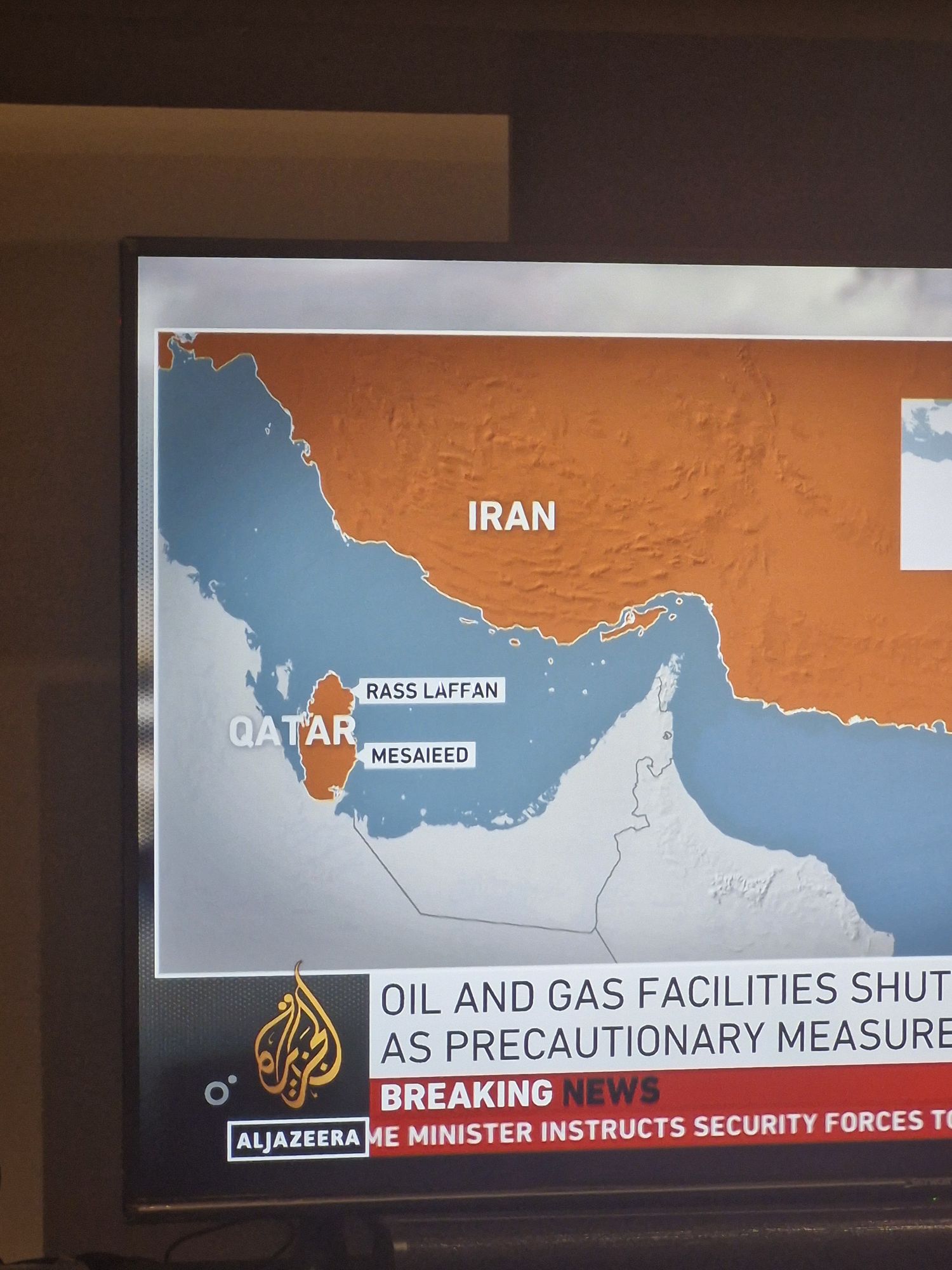
We are safe – for now.
For this, to quote the media, is a “developing story”. The situation remains fluid. It can, as we have come to appreciate, change in a heartbeat.
As newshounds, we knew the likelihood of conflict in the Middle East was increasing. But you never think it is going to happen. You mentally will it away.
If the breaking news of Israel’s attack on Iran on the telly on the morning of 28 February wasn’t sobering enough, the initial volley of missiles intercepted above us in Doha was terrifying – and surreal.
We’re in a war.
And four days in (3 March), it still feels incredulous.
Before the missiles
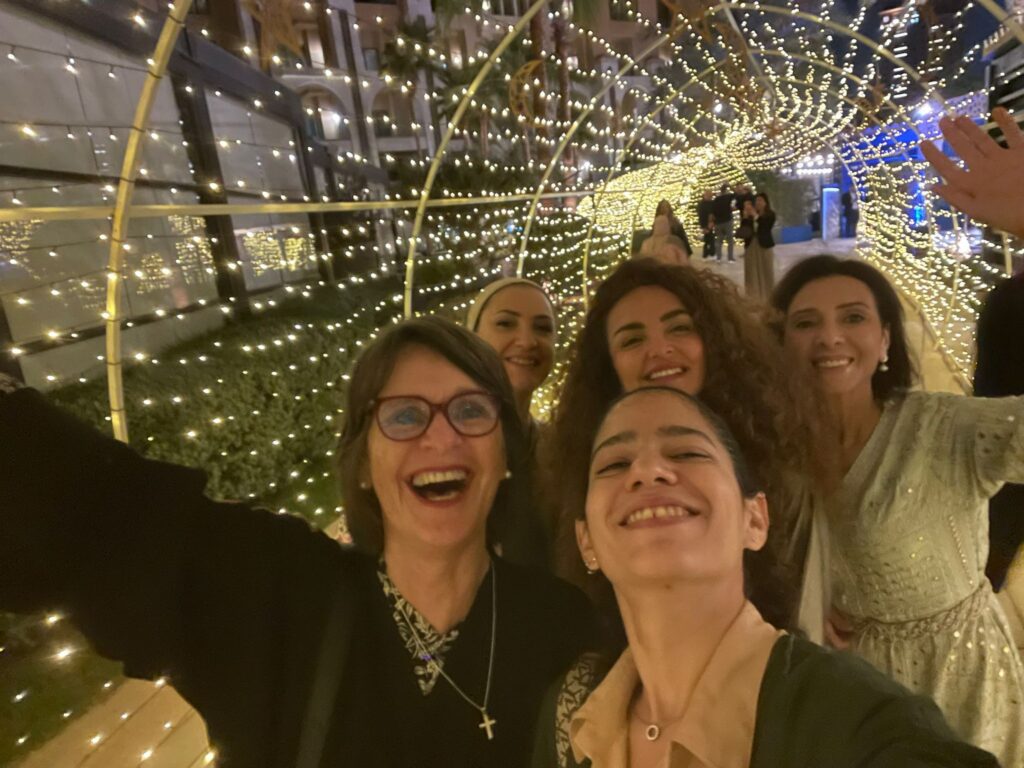
I mean, just two days before the attack on Qatar and its neighbouring Gulf states, I had attended a Ramadan suhoor celebration with more than 1000 others of differing nationalities and faiths. I remember thinking at the time, how wonderful is this.
This is what life should be like – a world in which everyone is respected and embraced, regardless of their ethnicity, faith or culture.
There were seven at our table, with 11 passports between us. I was the only English first- language speaker, but this mattered not a jot. We were having fun. Eating, laughing and learning about each other’s lives. Life was good.
Day 1: 65 missiles
And then Saturday (28 February) happened.
First the breaking news on Al Jazeera English, and within an hour, our first big boom.
We experienced missile attacks twice last year – the first when Iran targeted the same US airbase, Al Udeid, on 24 June, and the second on 9 September, when the Israelis sought to kill Hamas leaders in a house not 10km from our own home.
Both shocking events were over within a day. It was as if they had never happened. Life resumed as before.
But this time I sense it’s going to be different. (For a synopsis on how Qatar and the other Gulf countries are embroiled in a war that is not theirs, please go to Al Jazeera).
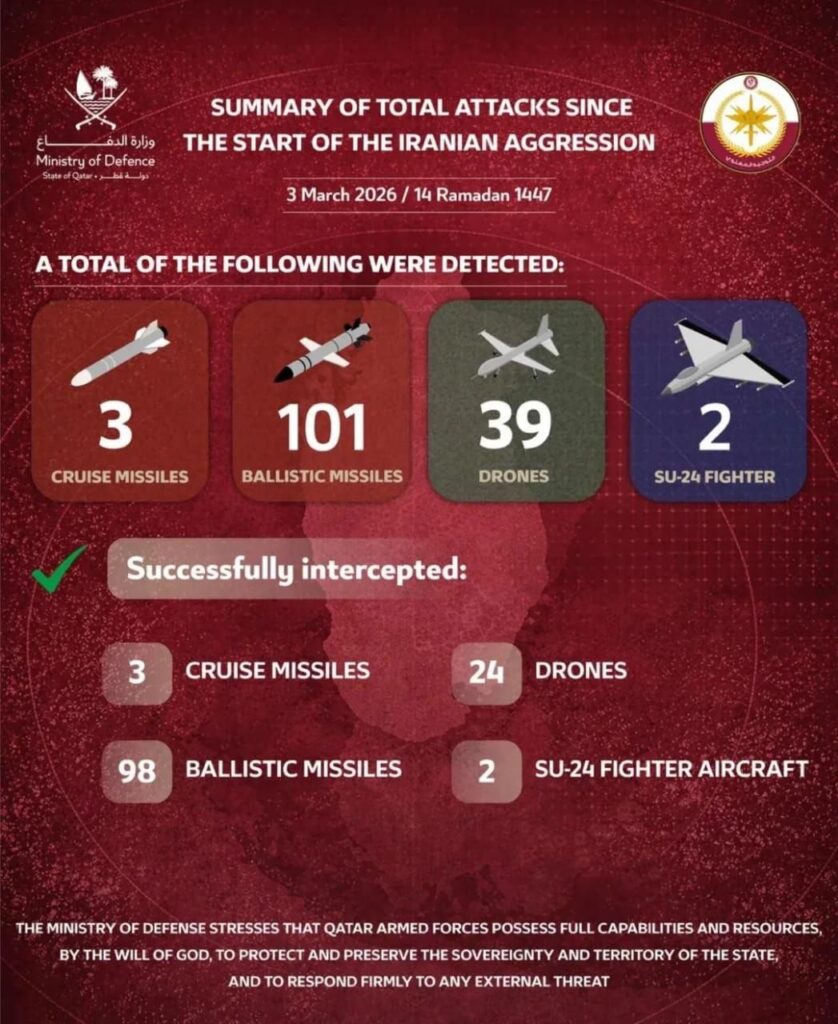
65 missiles were blasted at us on day one, 63 of which were thankfully intercepted by the Qatari military. You only learn this later.
We felt and heard them all – some closer than others, but all frightening and other-worldly. When brave enough to look outside, we saw some in the night sky, too.
I monitored the missiles, mainly to give me something on which to focus, amid the family WhatsApp messages and personal internal turmoil, as captured below:
12.30pm – 3
12.33pm – 2
12.34pm – 2 and so it went on throughout the day, with no obvious pattern.
By this time, Bahrain’s naval base had been hit, the UAE, Kuwait and Saudi were fending off missiles too, and we’d received two official Qatari emergency warnings (loud enough to send you into orbit, too.)
Social media posts of the missile debris go viral, like the one of falling debris that burst into flames.
And, just as I trying to sleep, another loud volley of sonic booms around 11.20pm.
The aftershocks shake the windows and house and reverberates right through you. And you’re wide awake all over again.
All our senses are heightened.
Day 2: From shock to taking stock – and a stranded Kiwi couple
We rose from a sleepless night to the news that Iran’s Supreme leader, the Ayatollah Khamenei has been killed.
And then two big sonic booms.
So, no quick resolution to this conflict then.
But taking in a missionary couple stranded in transit in Doha, one of the world’s biggest aviation hubs, was an easy decision. It was the right thing to go even if they are All Black supporters!
(That’s another thing about navigating a crisis, you must maintain a sense of humour.)
By now – just 24 hours into the conflict – it was time to take stock and assess the way forward, while acknowledging the uncertainty, our hopes and obvious fears.
And so, the day unfolded something like this:
- Ayatollah’s death
- Fewer bombs or at least fewer heard. Learnt later that Qatari fighter jets are now trying to intercept missiles before they reach Qatar to eliminate falling debris. (16 injured, 1 seriously because of debris).
- Confirmation to work from home
- Mark gets results from doctor. Not cancerous, praise God!
- Meeting with SA Embassy to discuss possible evacuation measures for Saffas. Google form – location survey to developed and shared soonest.
- Casualty numbers rising across the Gulf (3 UAE, 200-plus Iran, including 126 schoolgirls, 1 Kuwait, Israel 11). Airspace still closed.
- Mark fetches Kiwi couple. Still in meeting with volunteer Saffa team and embassy when Rosie and Nathan arrive.
- Working on two work press releases but struggling to concentrate.
- Make soup; Mark puts on pizza for lunch and soup becomes supper along with fresh bread. No bread or meat for me. It’s Lent.
- Chat to Meg (our daughter) online. Still working at school in Riyadh, Saudi Arabia.
- Messages pour in as world awakes to what is happening in the ME
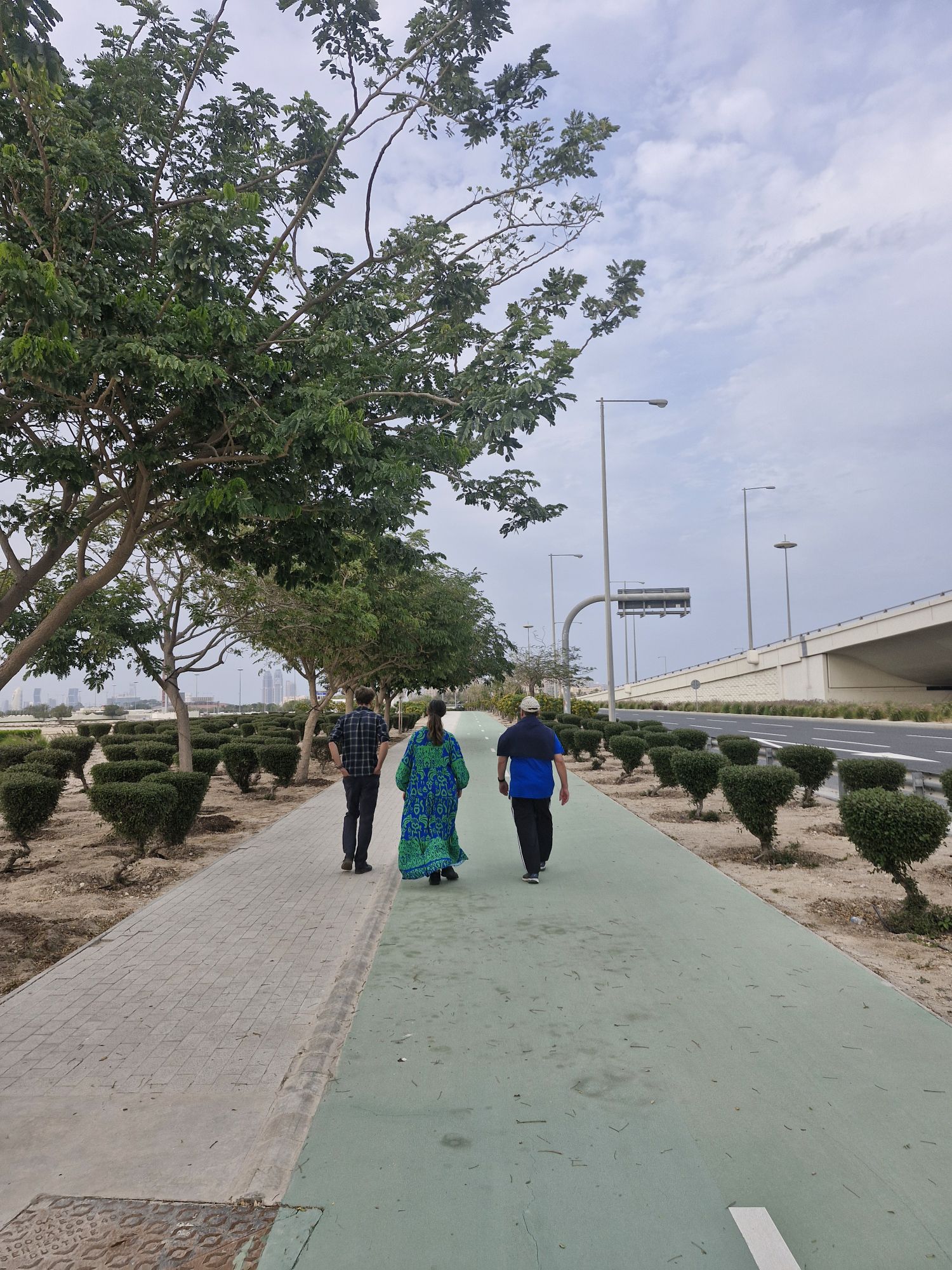
- Sneak out for a walk with phone at the ready, in case we need to sprint back
- Have an Arabic lesson – lesson 17 of 30. 10 minutes alone with teacher. I am not concentrating as hear more distant bombs. 2 others join and we learn about words that ask questions. (This is the stuff of rusty pins, Bev Erickson. Yes, I am mad).
- Soup for supper
- Mark has online church service (as service cannot take place – all public events suspended, including all Ramadan events).
- Watch news. And hubby doubly happy as Arsenal beat Chelsea 2 – 1. Earlier SA beat Zim T20.
- Remember to pay Julia. Julia paid.
So, there you have it, the normality and strangeness of it all.
Life goes on. Just as it did in the early days of lockdown during the coronavirus pandemic.
But we’re all a bit antsy, never quite knowing what to expect when.
Screen scene for information
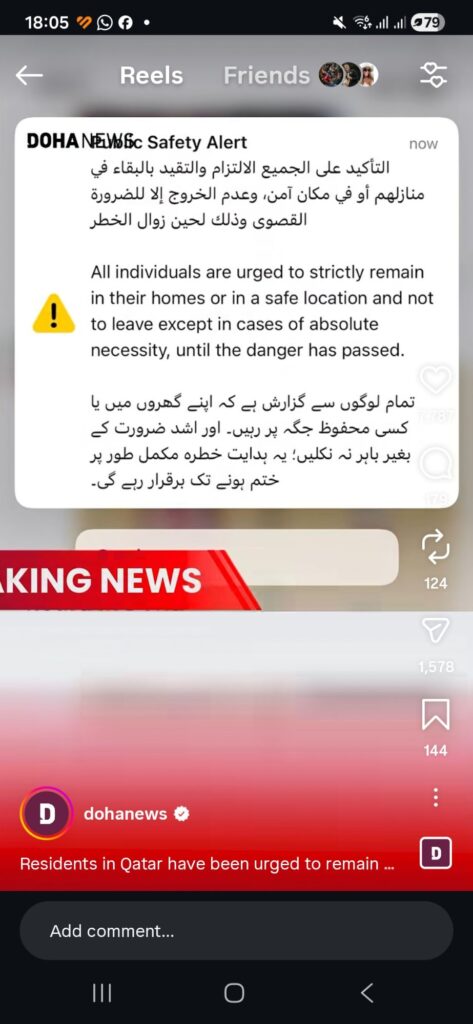
The reality of the present uncertainty is not only playing out on our telly – to which we have been glued, but also on social media.
Be it the latest news, guidelines for navigating a war or escaping it, even though the airspace is still closed, or the fears and frustrations expressed via community WhatsApp groups, people are searching and sharing on their phones.
We all want guidance, assurance and escape.
Scrolling offers insights to it all.
Mothers seek advice on what to tell their children about the “big fireworks”; others fume about kids chasing about when they should be kept safe inside; shops tout their new 24/7 hours and warehouses show off their stock (to counter panic buying); new news outlets offer explainers, fact boxes and videos of the latest developments (the number of lives lost; the price of gas now; the next possible move by the US; the advances into Lebanon and on it goes); and there are even light-hearted memes and jokes to escape the present hard realities.
One post showed missile debris “for sale”. This is a humorous but possibly foolhardy move considering Qatar’s strict stance when it comes internal security. We may not circulate such information but are instructed report any such find or incident directly to the authorities.
By way of example, if you spot someone begging in Qatar you are expected to report it to the relevant authorities online.
I know, I know. Imagine this in South Africa.
Civic concern
One of positives to emerge at this time is the willingness to help.
When it comes South Africans, to quote a friend, “there’s nothing like a war or rugby to unite us”.
Saffas in Qatar are a lively lot and ever ready to help as evidenced by the SA Embassy in Qatar and one of the social media volunteer groups, South Africans in Doha.
They have been communicating with Saffas in the country and are presently gathering contact and location details in case the up to 4000 South Africans believed to be living here need to be evacuated.
Hotels are accommodating stranded passengers for free or at nominal prices; shop and delivery services are still operating and where possible, employees are working from home.
We asked via our compound’s WhatsApp group (a compound is like a townhouse complex), for example, if someone might be able to print travel documents for our Kiwi couple. Within minutes we received three positive responses.
This, as Nathan and Rosie prepare to leave the conflict zone – a scenario that must be playing out in umpteen different ways given that the majority of those who live here are ex-pats. The Qataris only make up 12% of the 3 million people who call Qatar home.
For our Kiwi couple, a driver, a flight and a bed for the night in Riyadh, Saudi Arabia, have been sourced and secured – but at a price. The six-hour drive from Doha to Riyadh is going to set them back a quick R11 700 even before they consider the multiple flights needed to get from Riyadh to Auckland, New Zealand.
As for us, as we near the end of Day 4 without any daylight big booms thus far (but I am not holding my breath – which is just as well, because at 4.25pm there were two booms), we’re staying put, praying that sense will prevail and the growing conflict will soon end.
In the interim, please continue to hold the Middle East and all her people in your prayers.
There’s so much more I could share, but I will leave it there for now.
Please feel free to drop me questions. The more information we can share, hopefully the greater understanding and appreciation of what is happening here among ordinary people.


Leave a Reply